Structural Cuts That Reduce Storm Breakage
Tree Trimming in Pueblo for storm breakage risk reduction and safe clearance on residential properties
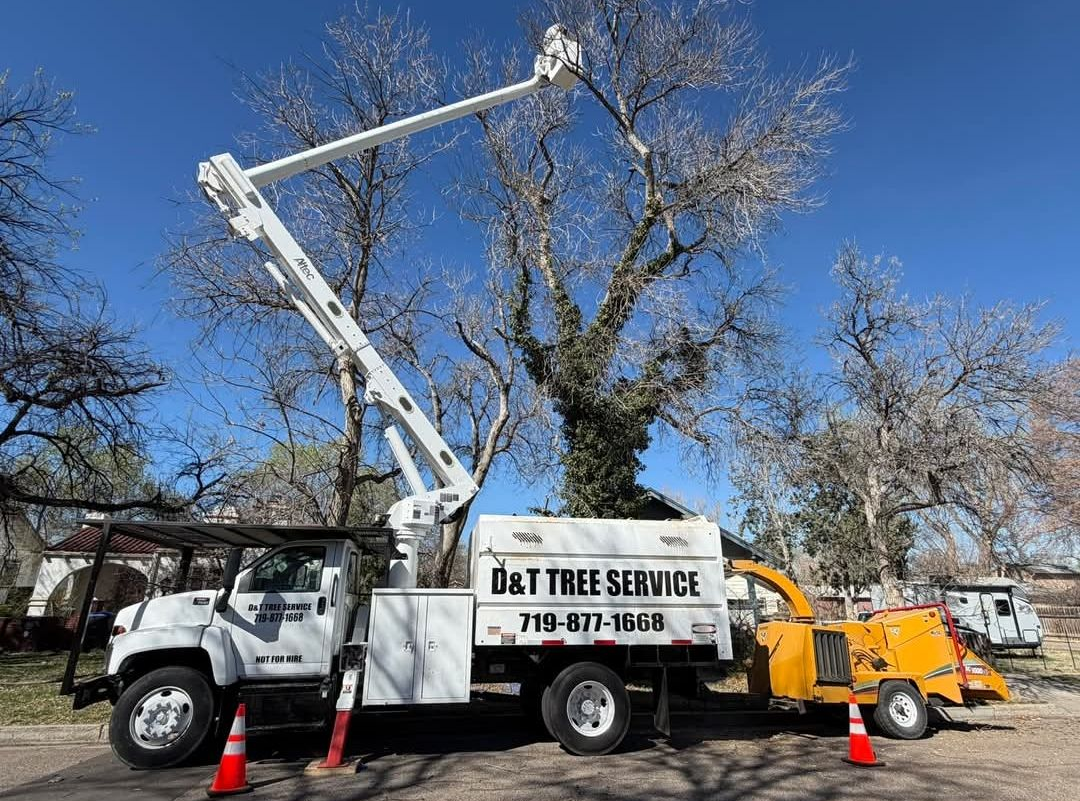
Older canopies overhanging driveways, rooflines, and fences in Pueblo's Northside and Bessemer neighborhoods regularly shed limbs during wind events. D&T Tree Service trims residential trees to reduce crown weight and maintain safe clearance from structures, which lowers the chance of breakage during Pueblo's late-season freezes and dry summer stress periods. The work focuses on structural safety cuts, not just aesthetic shaping, because the region's freeze-thaw cycles and high desert winds put continuous stress on branch unions.
Trimming involves crown-weight reduction cuts timed before freeze season to reduce the load on vulnerable branch unions. The crew removes end-weight from long horizontal limbs and thins interior growth to reduce wind resistance, which prevents the kind of sudden failure that happens when ice accumulates on heavy canopies. Proper timing matters because cutting too late in the season stresses trees heading into winter, and cutting too early leaves regrowth vulnerable to freeze damage.
Arrange a site visit to review which limbs need reduction and what clearance adjustments will lower storm risk on your property.
What You Notice Once Trimming Is Finished
Crown-weight reduction cuts remove the outermost sections of long limbs without topping the tree, which preserves the natural canopy shape while reducing the leverage that breaks branches during wind and ice loading. Interior thinning opens airflow through the canopy, which reduces fungal pressure during Pueblo's monsoon-season humidity spikes and allows better light penetration to lower branches.
After trimming, clearance is restored around rooflines, power lines, and fences, and the tree's silhouette looks balanced rather than lopsided or overgrown. The canopy remains intact but lighter, which means less stress on the trunk and scaffold branches when weather hits. You'll also notice fewer dropped limbs and less debris accumulation in gutters and on driveways.
The trimming strategy aligns with Pueblo's freeze calendar, so cuts are made during the window when trees can seal wounds before cold stress begins. This timing reduces the chance of frost cracking and disease entry at cut sites, which are common problems when trimming happens too late in the season.
Answers to Frequent Trimming Questions
Homeowners in Pueblo often ask about timing, what gets cut, and how trimming differs from pruning. These answers clarify what structural trimming involves and why it matters in Southern Colorado.
What does crown-weight reduction actually remove from the tree?
The crew cuts back the outermost sections of long horizontal limbs, removing end-weight without cutting into the main scaffold structure. This reduces leverage on branch unions during wind and ice loading, which is where most breakage starts on mature trees.
When is the best time to trim trees in Pueblo?
Trimming is most effective before freeze season, typically in late summer or early fall, so wounds have time to seal before cold stress begins. Trimming too late leaves fresh cuts vulnerable to frost damage and disease entry during winter.
Does trimming change the shape of the tree permanently?
Crown-weight reduction preserves the natural canopy shape while reducing overall mass, so the tree looks balanced rather than topped or butchered. The silhouette remains intact but lighter, and regrowth over the following seasons fills in the trimmed areas gradually.
Why does Pueblo's climate make annual trimming necessary?
Late-season freezes and dry summers stress branch structure, and high desert winds continuously load canopies with lateral force. Annual trimming reduces accumulated deadwood and end-weight before storm season, which lowers the chance of sudden failure.
What's the difference between trimming and pruning?
Trimming focuses on reducing storm breakage risk through crown-weight reduction and clearance cuts, while pruning addresses tree health and structure through selective interior cuts. Both are necessary, but they target different problems and use different cutting strategies.
D&T Tree Service operates locally in Pueblo and times trimming work to align with Southern Colorado's freeze and storm cycles. Contact the crew directly at (719) 877-1668 to schedule trimming before the next freeze season arrives.