Protecting Large Trees From the Inside Out
Tree Injections in Pueblo for emerald ash borer pressure and drought stress in high-value canopy trees
Pueblo's emerald ash borer pressure and seasonal drought stress attack the vascular system of mature elm and ash trees, and surface sprays cannot reach that deep into the trunk. D&T Tree Service delivers systemic trunk injection treatment that introduces protection directly into the tree's vascular tissue, the only method that addresses pest activity and moisture stress at the source. Large canopy trees on Arkansas River-adjacent properties and older Northside lots face the highest vulnerability due to age, species, and environmental exposure.
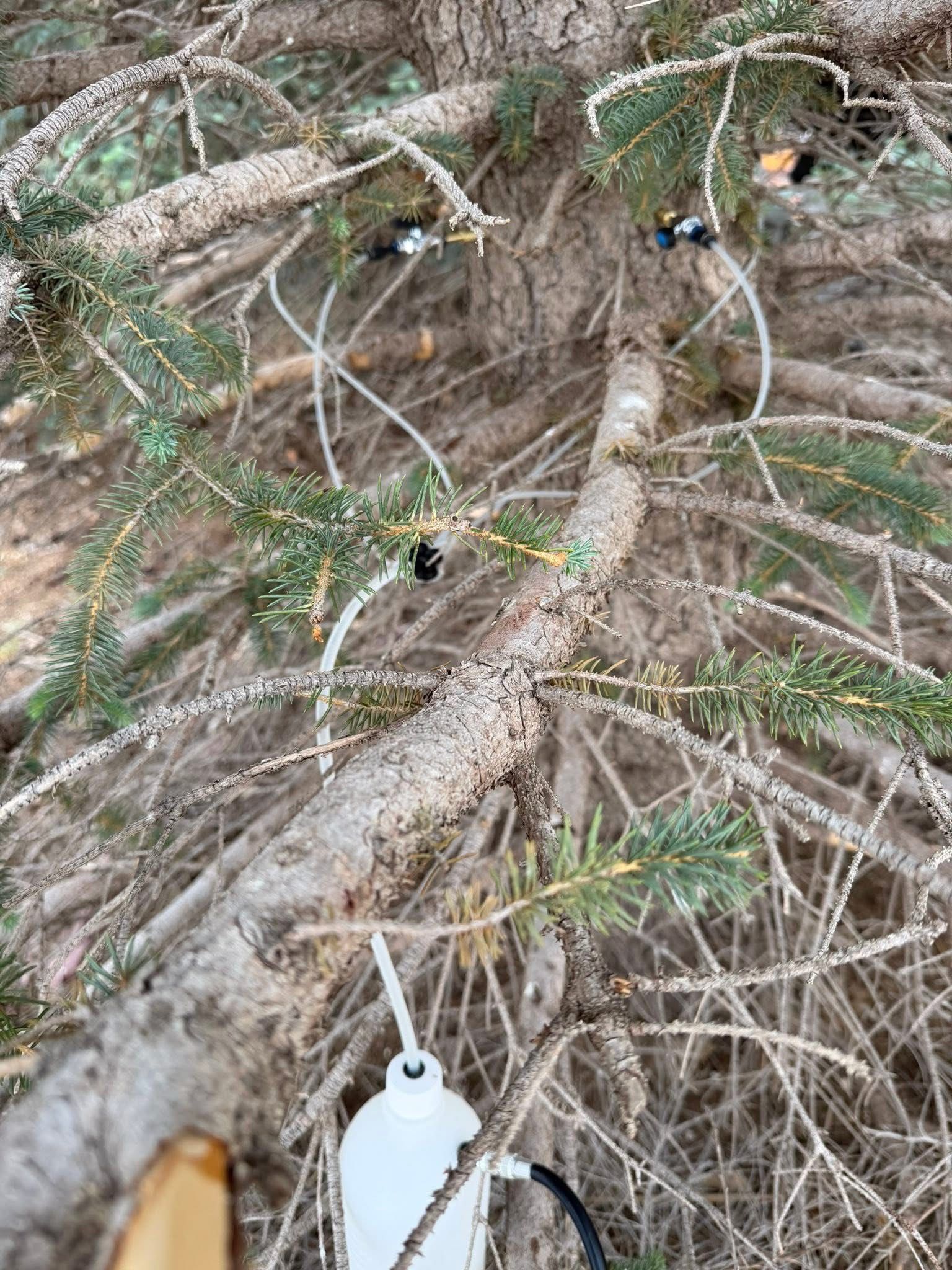
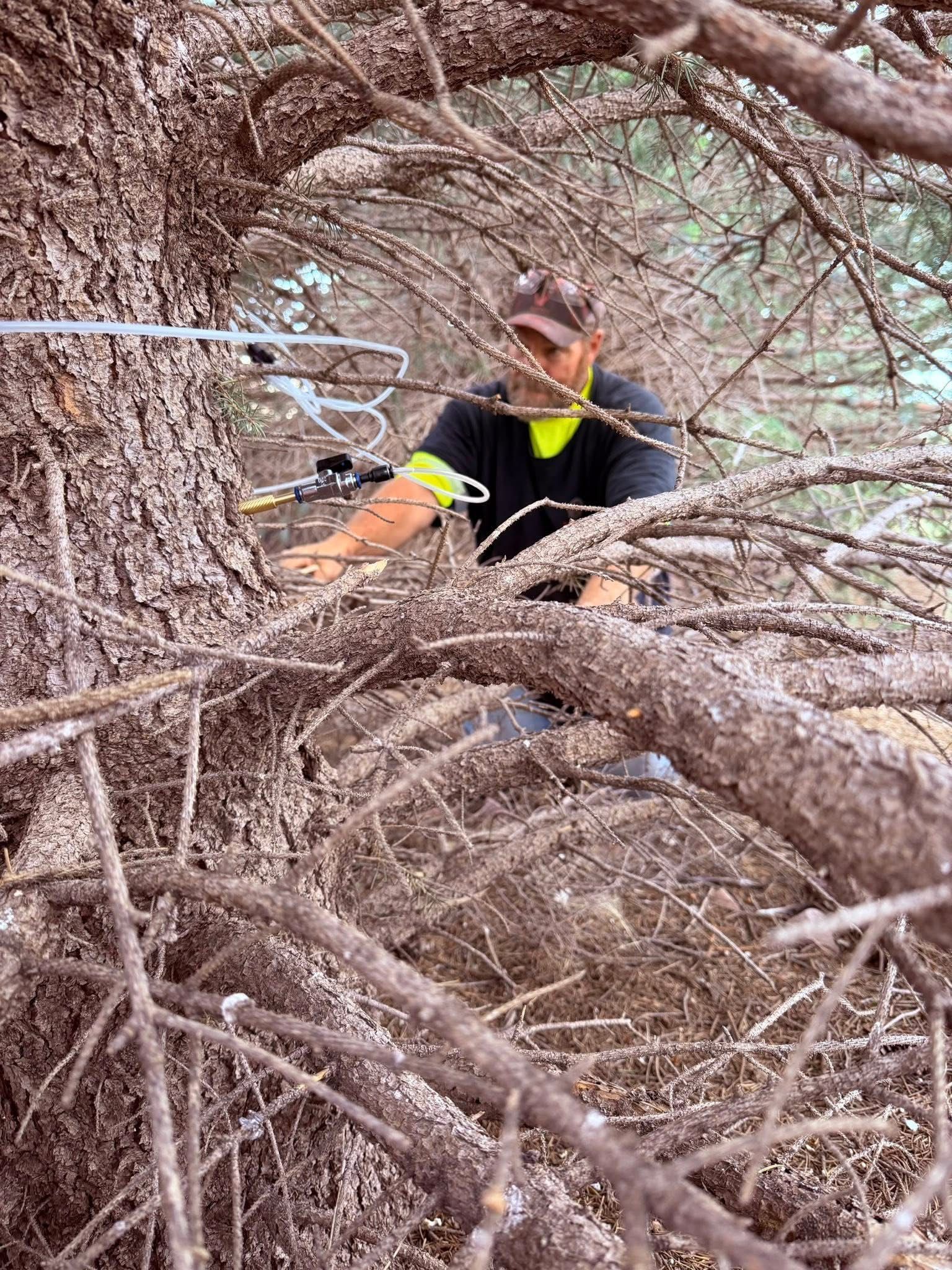
The injection process introduces treatment solution through the bark and into the cambium layer, where it moves upward through the xylem and distributes systemically to branches, leaves, and root tissue. This method bypasses the limitations of foliar sprays, which sit on leaf surfaces and degrade under sun and wind, and it delivers sustained protection during the growing season when pests feed and drought stress peaks.
Schedule a property assessment to determine which trees qualify for injection treatment based on size, species, and current health status.
What Direct Vascular Treatment Accomplishes
The injection process is calibrated to tree diameter and health condition, with entry points spaced around the trunk to ensure even distribution through the vascular network. Treatment enters the sapwood and moves through the tree's natural fluid transport system, reaching branch tips and root zones that external applications cannot access.
After treatment, you will not see immediate surface changes, but the tree's internal chemistry shifts to resist feeding damage and manage water use more effectively under drought conditions. Canopy density stabilizes, new growth resumes in subsequent seasons, and premature leaf drop or dieback slows as the vascular system carries protection into actively growing tissue.
Injection timing matters—applications during early spring or fall align with active sap flow, which carries treatment most efficiently. Trees under severe stress or with extensive existing damage may not respond, so early intervention on healthy but threatened specimens yields the strongest results.
What Property Owners Ask Before Treatment
Timing, effectiveness, and long-term value come up frequently when property owners in Pueblo consider trunk injection treatment for mature trees facing pest or drought pressure.
What pests does trunk injection control that sprays cannot?
Emerald ash borer and similar wood-boring insects feed inside the cambium layer and sapwood, where surface sprays cannot penetrate, so systemic injection through the vascular tissue is the only method that reaches feeding sites and prevents larvae from tunneling through the trunk.
How long does injected treatment remain active in the tree?
Most systemic trunk injections provide protection for one to two growing seasons depending on the formulation used, tree species, and environmental stress levels, with retreatment scheduled before protection wanes.
Can injection treatment reverse damage that has already occurred?
Injection protects healthy vascular tissue and prevents further damage, but it cannot repair sections of the trunk or branches where the cambium layer has already been destroyed by boring insects or drought dieback.
Does the injection process harm the tree or create permanent wounds?
Entry points are small, typically drilled to a shallow depth that does not compromise structural integrity, and the tree compartmentalizes the site naturally as it would with a branch wound, sealing over within one or two growth seasons.
Why is trunk injection more effective in Pueblo than repeated foliar spray?
Pueblo's high desert sun, low humidity, and wind rapidly degrade surface-applied chemicals before they can be absorbed, while direct vascular injection bypasses environmental exposure entirely and delivers treatment where pest activity and drought stress actually occur inside the tree.
D&T Tree Service evaluates tree species, diameter, location, and current health before recommending injection treatment, and applies it during optimal sap-flow windows for maximum vascular uptake. Request an on-site evaluation to determine whether your canopy trees are candidates for systemic injection based on pest pressure and drought exposure in your area.